

Spider-Man: Brand New Day Ending Explained: Jean Grey, Post-Credits Scene & What’s Next
This is a full spoiler breakdown of Spider-Man: Brand New Day’s third act, post-credits scene, and what it sets up for the MCU. If you haven’t seen the film yet, bookmark this and come back after. For my full spoiler-free take on the movie itself, read the Spider-Man: Brand New Day review.
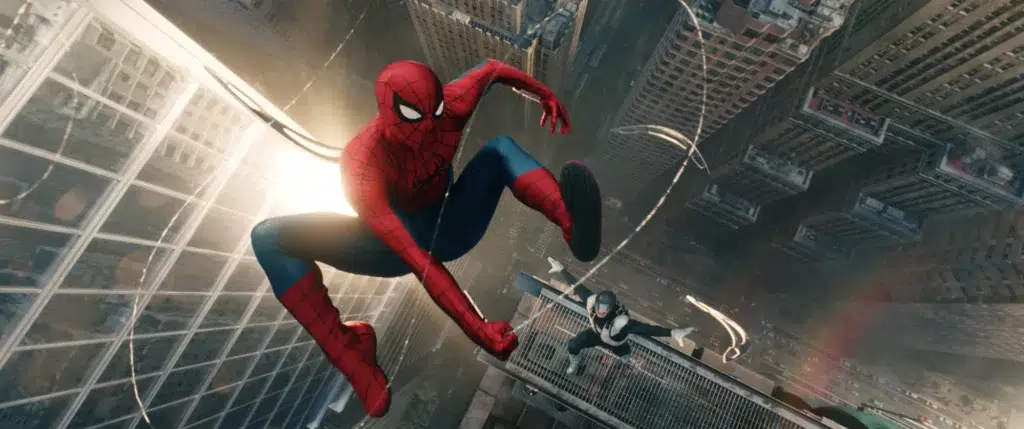
Peter Parker chooses compassion over force in his final confrontation with Jean Grey, letting her into his mind instead of fighting her. He takes a bullet meant for her from Frank Castle, and Jean keeps him alive with her powers until he reaches a hospital. Jean leaves the city on a bus, MJ shows the first signs of possibly remembering Peter, and Ned appears to recognize him through their old secret handshake. The lone post-credits scene shows Ned’s Spidey Tracker app picking up a second Spider-Man signal far out in space, closing on the text “Spider-Man Will Return.” There is no mid-credits scene, only the one at the very end.
What Happens at the End of Brand New Day?
In the film’s final act, Peter goes to rescue Jean Grey (Sadie Sink) from the Department of Damage Control (DODC), led by Bill Metzger (Tramell Tillman). Jean is being held and experimented on, the same treatment that killed her sister Sara. While in custody, she spots the word “V-Max” scrawled on a vent above her cell, the last thing Sara ever saw before she died there. That discovery pushes Jean’s powers past anything we’ve seen from her so far, and her psychic range explodes outward from roughly 33 feet to over 3,000 feet, immobilizing everyone caught inside it, including MJ and Ned in their own apartment.
Peter fights through The Hand, who Jean has psychically taken over, and reaches her just as she’s on the verge of killing Metzger with a swarm of levitating glass shards. Instead of trying to overpower her, he does something I genuinely didn’t see coming: he lets her into his mind.
Who Is Jean Grey, Really?

The biggest marketing mystery of the year gets confirmed here: Sadie Sink is playing Jean Grey, one of the most powerful mutants in Marvel comics and a founding member of the X-Men. It’s a reveal the film plays coy with internally too. Peter doesn’t know who she is either until he runs her photo through his own database mid-movie.
What the film adds that the marketing never hinted at is her motive, and this is the part I actually found more interesting than the reveal itself. Jean isn’t a villain in the traditional sense. She’s been searching for, and grieving, her sister Sara Grey, a fellow mutant who died under Damage Control’s custody while they tried to harness her powers. Everything Jean does across the film, the possessions, the psychic lockdowns, the fight with Metzger, traces back to that grief. By making her sympathetic rather than simply dangerous, Brand New Day sets her up less as a defeated villain and more as the MCU’s first real doorway into the X-Men.
The Final Battle: Why Peter Lets Jean Into His Mind
Rather than fighting Jean at full power, Peter opens his mind to her, sharing one of his most treasured memories: a quiet conversation with Aunt May (Marisa Tomei). In that memory, May tells Jean that the qualities making her different are exactly what people will sometimes fear, but that she should never be afraid of being herself. It’s a message clearly meant for Peter as much as for Jean, and it works. Jean realizes she isn’t alone in her grief, and she steps back from killing Metzger.
I think the choice matters structurally too, not just emotionally. Punisher’s answer to a threat like Jean is a bullet. Peter’s answer is empathy. The film draws a direct line between the two philosophies and lets Peter’s version win, even though it nearly costs him his life.
Why Peter Takes the Bullet for Jean
Just as Jean decides to spare Metzger, Frank Castle, watching from outside her psychic barrier and still convinced she’s a threat, fires a sniper shot at her. Peter senses it a half-second too late to stop the shot entirely and throws himself in front of it instead, taking the bullet meant for Jean directly
Jean returns the favor. Still psychically connected to him, she keeps Peter alive through the night, essentially acting as a psychic ventilator and controlling his breathing until paramedics can reach him. He wakes up in the hospital the next morning with Frank standing guard, visibly guilt-ridden over nearly killing him. Frank later puts on Peter’s mask as a decoy so Peter can slip out of the hospital without exposing his identity. By morning, Jean has already left the city on a bus, headed toward what the film implies is upstate New York, the traditional X-Men home base in the comics.
Does MJ Remember Peter?
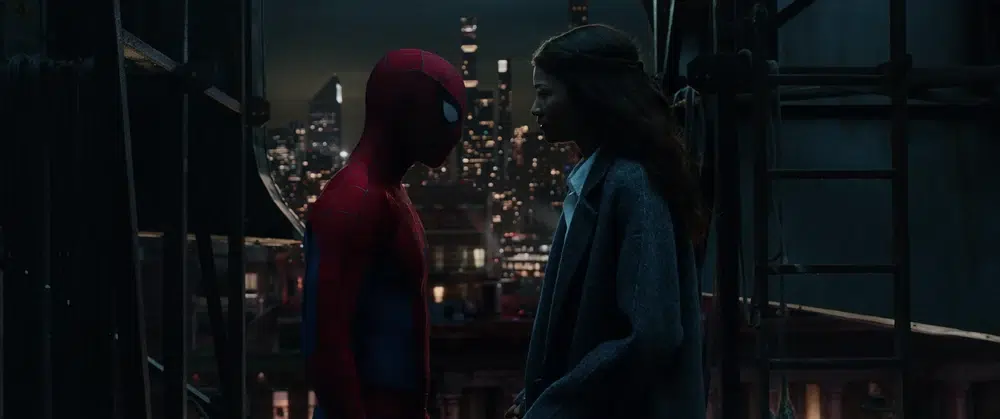
This is the ending’s most quietly devastating thread, and honestly the one I keep thinking about. Earlier in the film, MJ (Zendaya) finds a letter Peter had written her and tells him flatly that she doesn’t remember him or their relationship at all, a direct, unresolved consequence of Doctor Strange’s memory spell at the end of No Way Home.
During Jean’s psychic lockdown, both MJ and Ned get caught in the blast radius. In the aftermath, as Jean’s hold over the city fades, we see MJ shed a single tear while still under the effect, in her and Ned’s apartment. Once it lifts, she’s shown alone on a rooftop, holding the broken black dahlia necklace Peter gave her in No Way Home.
It’s never stated outright, but the implication is clear: something about Jean’s psychic connection to the people around Peter may have jarred loose a flicker of memory in MJ, even if she doesn’t consciously understand what she’s feeling yet. Peter and MJ are not shown getting back together by the end of the film.
The Ned Handshake: Does He Get His Memory Back?
The film’s very last scene before the credits is the one fans have argued about most, and I’ll be honest, I went back and forth on it myself. Peter spots Ned at a corner store while picking up flowers for Aunt May and decides to reintroduce himself using his real name instead of a fake one. Ned doesn’t recognize him, but when Peter starts their old signature handshake, Ned’s hands fall into it automatically, finishing the sequence without missing a beat. He looks up, surprised, and says, “Peter?”
Then the film cuts straight to credits.
Then the film cuts straight to credits.
There are two competing readings here, and the film deliberately doesn’t confirm either one. The first is muscle memory: a handshake performed hundreds of times can live in your body long after the person attached to it is gone from your conscious memory, the same way a musician’s fingers remember a song. The second, more speculative reading leans on something established back in No Way Home: Ned has latent magical ability. Some fans have theorized that whatever spark passed between them during the handshake, or Jean’s psychic disturbance earlier in the film, may have genuinely restored a piece of his memory. Director Destin Daniel Cretton has kept the answer deliberately open, telling The Hollywood Reporter he wanted room for “a slight glint of recognition” without confirming exactly what it means. My own read, for what it’s worth, leans toward muscle memory. It’s the simpler explanation, and Marvel rarely resolves a mystery this cleanly in a throwaway final scene.
Spider-Man: Brand New Day Post-Credits Scene Explained
There is exactly one credits scene in Brand New Day, and it comes at the very end, after the full crawl. There is no mid-credits scene this time, a break from the pattern No Way Home set.
The scene returns to the Spidey Tracker, the crowdsourced app Ned built earlier in the film to log Spider-Man sightings around the city. The app picks up a new alert. The map zooms out, first from street level to all of New York, then to the whole Earth, then keeps going, past the Moon and out into open space. After a brief glitch, a second Spider-Man marker appears, this one far beyond the planet entirely. The screen cuts to black on Marvel’s classic line: “Spider-Man Will Return.”
What exactly the tracker picked up is left completely unanswered on screen. Coming just months before Avengers: Doomsday hits theaters this December, most read it as a signal that Peter’s story is about to be pulled off the streets of New York and into a much bigger, cosmic-scale event.
What Peter’s Inhibitor Chip Means for the X-Men
This is the detail I think most people are sleeping on, and it’s easy to miss if you’re not paying close attention. Early in the film, as Peter’s own powers begin mutating in ways he can’t control, he adapts technology from Bruce Banner’s Hulk-suppression research to build himself a personal inhibitor chip. Both Banner and MJ warn him against taking this further. He does anyway, building a more powerful, universal version specifically to neutralize Jean Grey long enough for Damage Control to safely detain her.
It works. And that’s the problem. Peter hands both Jean and the technology that disabled her straight to Bill Metzger and Damage Control, an organization whose comic-book version has a long history as an anti-mutant operation. Metzger escapes at the end of the film, still in possession of the schematics.
In the X-Men comics, this exact kind of device eventually becomes the inhibitor collar, a piece of tech used to suppress and imprison mutants against their will, most famously in the “Days of Future Past” storyline. Peter isn’t building a weapon on purpose. But without meaning to, he may have just handed the MCU’s future anti-mutant forces their founding piece of technology, echoing the way his own naivety in Far From Home handed Damage Control the E.D.I.T.H. drones. I think this is the single darkest idea buried in an otherwise hopeful film, and it’s the one I’d want a future Spider-Man movie to actually reckon with rather than quietly drop.
What This Sets Up for Spider-Man 5 and Avengers: Doomsday
Brand New Day was always going to be the last Spider-Man solo film before Avengers: Doomsday arrives this December, and its ending is built to funnel directly into it. Jean Grey’s confirmed presence, alongside the seeds planted around Damage Control’s mutant-suppression research, effectively confirms that the X-Men are now a real, active part of the MCU rather than a future promise. The post-credits scene’s push out into deep space lines up with growing speculation that Peter’s next appearance will pull him into cosmic, multiversal stakes well beyond New York, quite possibly tied to Secret Wars given how directly this film ties into mutant lore.
Closer to home, Peter’s fractured relationships with MJ and Ned are clearly being left open on purpose rather than tied off. Whatever comes next, whether that’s Spider-Man 5 or another team-up film, will likely need to resolve whether either of them ever fully gets their memory of him back.
Unanswered Questions
A few threads I don’t think the film answers, and my honest guess on each:
- What did the Spidey Tracker actually detect in deep space? My bet: this is a Fantastic Four or Secret Wars tease rather than anything Spider-Man 5 resolves directly.
- What does Bill Metzger do with the inhibitor schematics now that he’s escaped with them? This feels like the seed for whatever anti-mutant storyline the MCU builds toward next, possibly years down the line.
- Where is Jean Grey headed on that bus? Almost certainly upstate New York, setting up an eventual X-Mansion, though the film never says so outright.
The MJ and Ned threads get their own full breakdown above, since those aren’t really open questions so much as choices the film makes on purpose.
Spider-Man: Brand New Day Ending: Frequently Asked Questions
What happens at the end of Spider-Man: Brand New Day?
Peter chooses empathy over violence when confronting Jean Grey, allowing her into his mind and using a memory of Aunt May to reach her. Frank Castle then shoots at Jean, and Peter takes the bullet. Jean keeps Peter alive until he reaches the hospital before leaving New York. The film then leaves Peter’s relationships with MJ and Ned deliberately unresolved, while the post-credits scene introduces a new mystery involving the Spidey Tracker.
Is Jean Grey the villain in Spider-Man: Brand New Day?
Not exactly. Jean initially appears to be the film’s main antagonist, but her actions are driven by grief over her sister Sara and what happened to her while in Damage Control’s custody. The film ultimately presents Jean more as a tragic antagonist, while Bill Metzger and Damage Control emerge as the larger threat.
Does Ned get his memory of Peter back?
The film deliberately leaves this ambiguous. Ned instinctively completes the secret handshake he shared with Peter and then says “Peter,” suggesting that something may have survived beneath the memory wipe. However, the movie doesn’t explicitly confirm whether his memories have fully returned.
Does MJ remember Peter Parker at the end?
Not explicitly. MJ still says she doesn’t remember Peter or their relationship, although the ending gives her an emotional connection to Peter that may suggest something remains beneath the memory wipe. The film doesn’t confirm that her memories have returned.
What happens to Jean Grey after the final battle?
After Peter reaches her emotionally and prevents her from killing Metzger, Jean helps keep Peter alive after he takes the bullet meant for her. She then leaves New York, leaving her future and eventual connection to the X-Men open.
Is there a mid-credits scene in Spider-Man: Brand New Day?
No. There is no mid-credits scene. The movie has a single scene that appears after the full credits.
What does the Spider-Man: Brand New Day post-credits scene mean?
Ned’s Spidey Tracker detects Spider-Man moving away from Earth and into deep space before the movie ends with “Spider-Man Will Return.” The film does not identify exactly what the signal represents, leaving open possibilities involving Peter’s future, another universe, or a larger MCU storyline.
What does Peter’s inhibitor technology mean for the X-Men?
Peter develops technology capable of suppressing mutant powers, and Damage Control ends up with the technology after the confrontation with Jean. This could become the foundation for future anti-mutant technology in the MCU, although the film does not explicitly confirm that it will evolve into the comic-book inhibitor collars.
9. What does the ending mean for Spider-Man’s future?
The ending leaves Peter’s next chapter deliberately open. MJ and Ned’s memories, Jean Grey’s departure, Damage Control’s possession of the inhibitor technology, and the mysterious Spider-Man signal all provide potential threads for future MCU stories. The post-credits scene strongly suggests that Spider-Man will return, but the movie doesn’t reveal exactly where his story goes next.
More Movie Endings to Explore
Finished with Spider-Man: Brand New Day ending explained? Dive into more movie endings, hidden details, and post-credits scenes:

 using WordPress and
No responses yet